
What 10 Years of European Secondhand Data Actually Looks Like
Getting reliable European data on the secondhand apparel market has been notoriously difficult. Most published figures are either global, US-focused, or fragmented across paywalled reports with conflicting methodologies. So we did the work, combining ThredUp/GlobalData's annual Resale Reports, Statista, and a bit of triangulation with our AI research assistants, to build a clean European picture from 2016 to 2026.
The result is striking.
The European secondhand apparel market has grown from €14 billion in 2016 to an estimated €87 billion in 2026, a more than six-fold increase in a decade. Growth was steady but unremarkable until 2022. Then Vinted started scaling aggressively across the continent, eBay and Sellpy moved to defend their positions, and what had been a fragmented flea-market category became serious infrastructure almost overnight.
Today, secondhand represents around 10% of all European apparel spending and is growing roughly 2,7 times faster than the traditional apparel market. It's one of the fastest-growing segments in European retail.
But here's what should make every fashion brand pause: the brands whose products fuel all this growth capture almost none of the value. Every resold item is a customer relationship, but it happens on P2P platforms like Vinted, entirely outside the brand's ecosystem. Same name on the label, but no visibility, no control, no share of the revenue.
That's the gap we built Ninyes to close. Fashion resale is no longer a question of if. It's a question of who captures the value when it happens.
For most brands today, the answer has been: someone else.
If you're a fashion brand ready to change that, get in touch.
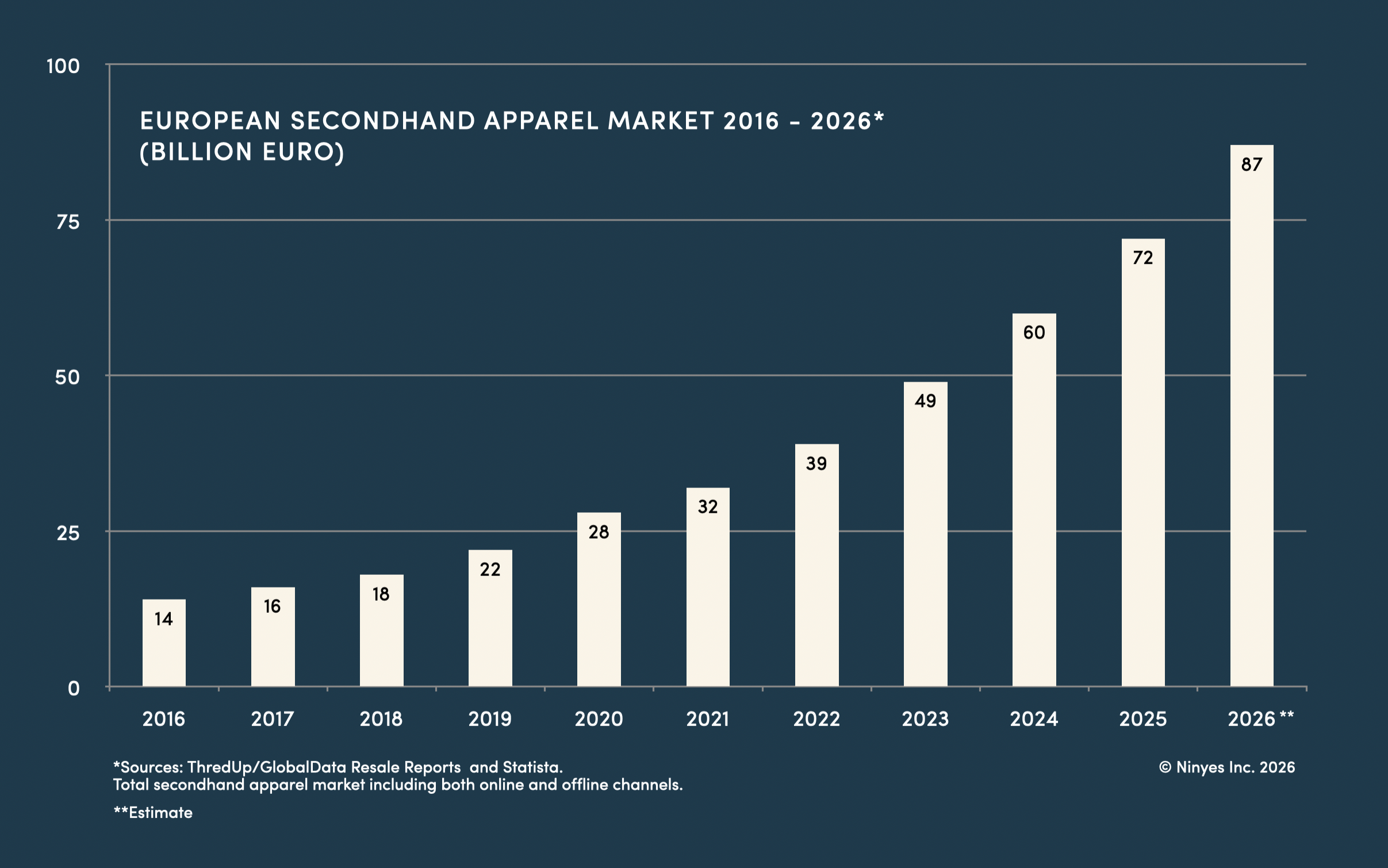
Sources: ThredUp/GlobalData Resale Reports 2025–2026; Statista. European market figures estimated using global market data and Europe's share of global secondhand apparel spending. Total market value including both online and offline channels.